.jpg&w=1920&q=75)

The question almost always comes too late. Not before the session, but in the evening afterwards, as a message: "I'm meeting friends in a bit — one beer is fine, right?"
I'll say it straight, the same way I say it in the studio: alcohol and a fresh tattoo are a bad combination. Not because I want to ruin your evening, but because alcohol interferes exactly where a fine line is made and where it heals — with your blood pressure and with wound healing.
Almost nobody explains why. Usually there's just "no alcohol" on an aftercare sheet. Here's the why.
What alcohol does before the needle even touches you
Alcohol widens your blood vessels and thins your blood. For the session that means something very practical: you bleed more, and more wound fluid comes to the surface.
That is not a cosmetic problem. The pigment I place has to stay in the skin until the skin closes around it. If the spot keeps bleeding, part of it gets washed back out before that happens. I end up working against your circulation — and your circulation wins.
Then there's the craft side. More blood on the surface means I see less of what I'm doing. On a line barely wider than a hair I work in tenths of a millimetre. I wipe more than I tattoo.
Why this matters more for fine lines than for anything else
On a solid filled area, losing a bit of pigment barely shows. On fineline work it shows immediately.
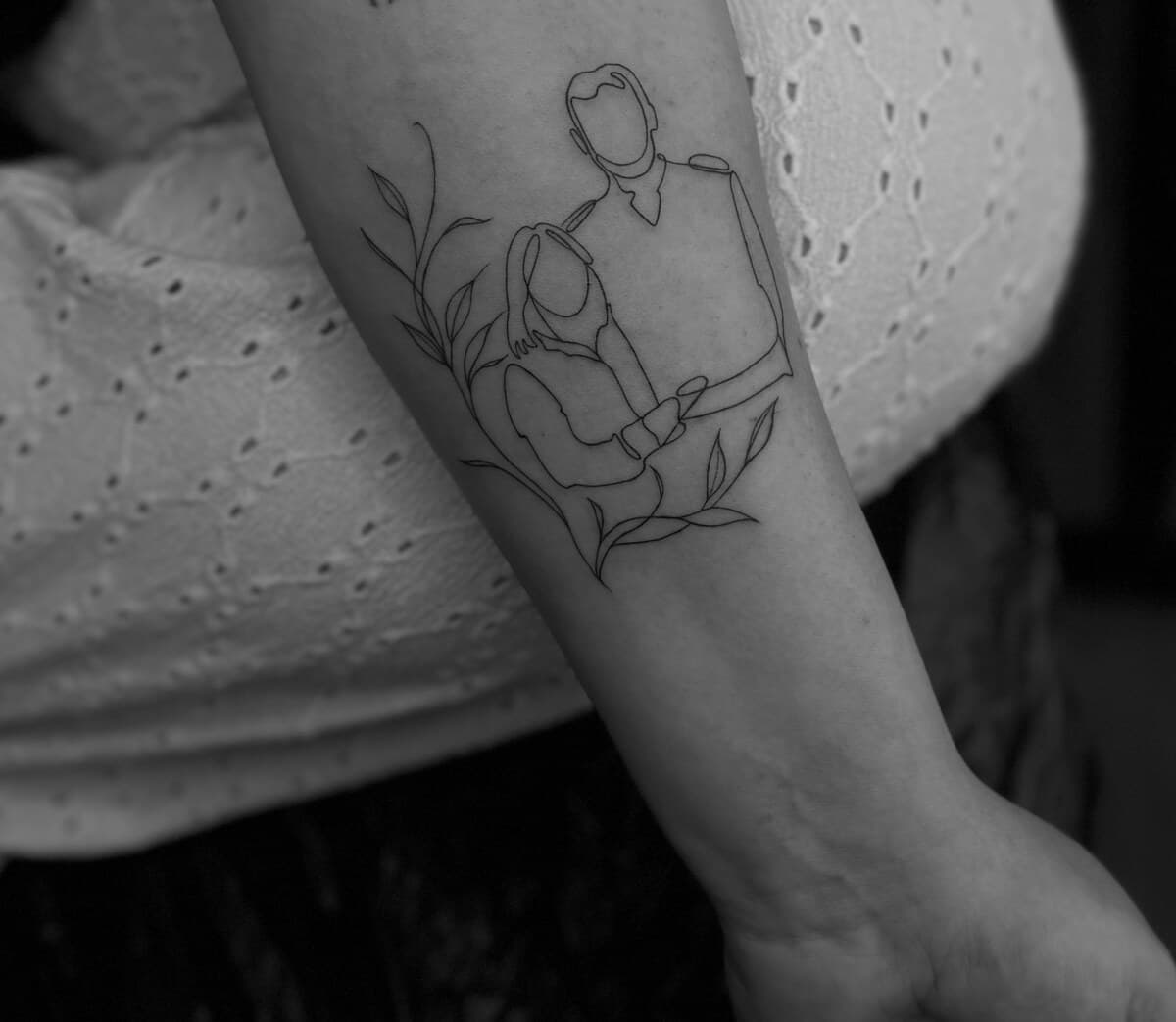
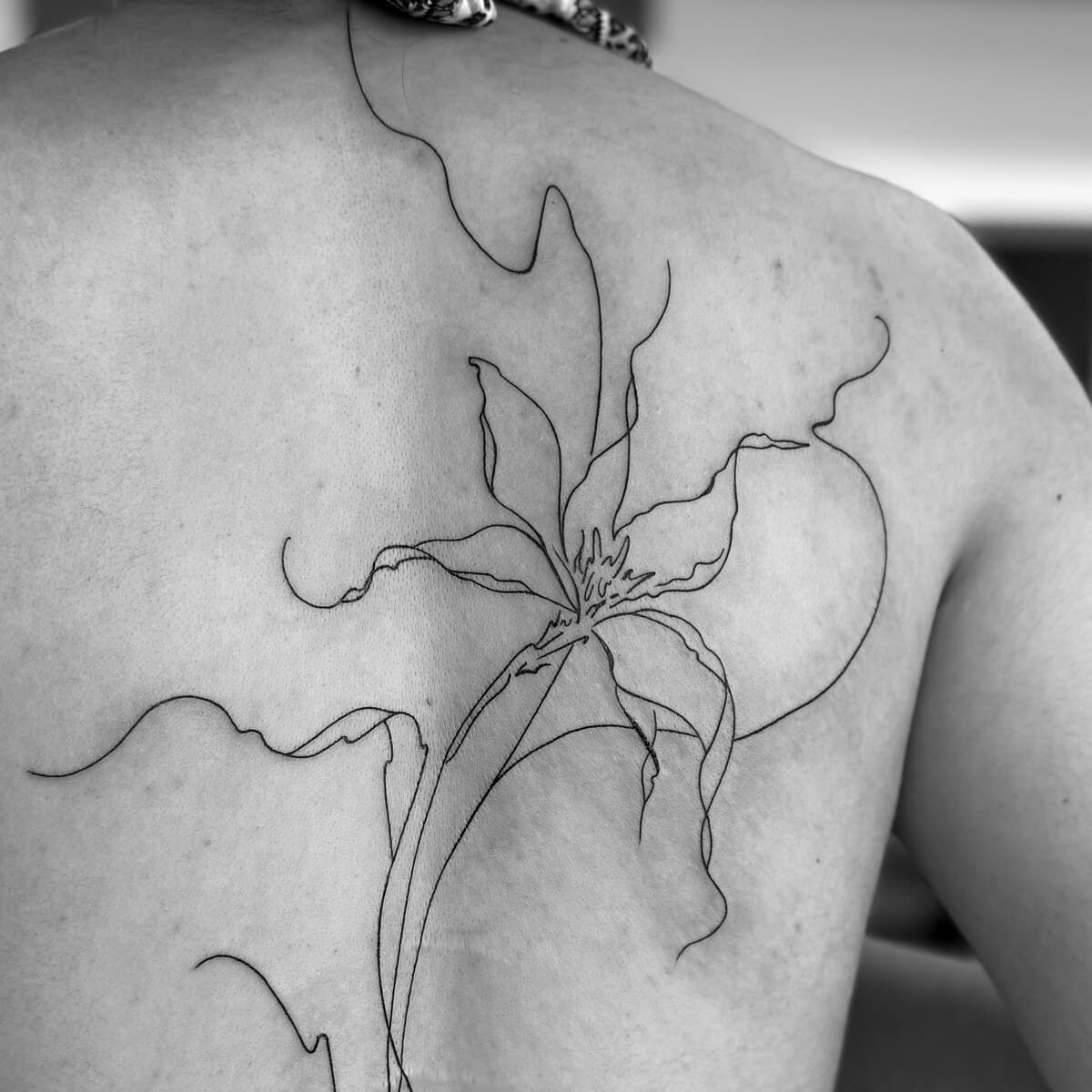
I deliberately run fine lines at the edge of what skin can hold — that is exactly why they look so delicate, and it is a conscious choice. But that edge has no buffer. Add alcohol on the day and a micro-section drops out right there. We don't see it during the session, we see it three weeks later — and then we're talking about a touch-up, even though the work itself was correct.
For the same reason alcohol shows up in my piece on blowouts, under the things you can actually influence yourself.
How long before — my rule
No alcohol for 24 hours before — that's the floor, not the recommendation. Two days is better. It's in my tattoo aftercare too, and it isn't a ritual: 24 hours is roughly what your circulation needs to be back to normal, and two days give you real margin.
And then let's stay honest. A single glass and a full night out are not the same thing. Both fall inside the same window though, and your skin notices both. The difference isn't moral, it's physical — hungover means dehydrated, and dehydrated skin takes pigment worse.
One more thing, because it genuinely happens: alcohol is not a painkiller. It doesn't make you less sensitive, only less settled. If the session scares you, tell me — that's what breaks and a plan are for, and both work better than two beers. What the pain is actually like, I wrote down in tattoo pain.
And afterwards? The part almost nobody talks about
This is the question I get most often — and the one missing from most aftercare sheets.
A fresh tattoo is an open wound. For the first day or two your body is busy closing it. Alcohol in that window widens the vessels again: the area weeps longer, the wrap fills up faster, and the skin takes longer to settle.
My rule: nothing for at least 24 hours afterwards. If you want to make it easy on yourself, keep the first two days clear.
But the bigger part of the risk isn't biology at all. It's the evening itself.
What actually happens when you go out with a fresh tattoo
- You sweat — and sweat on a fresh wound is exactly what we're avoiding, for the same reason training after a tattoo waits two weeks
- Everyone wants to see it, and someone will touch it
- You lean on bars, tables, the backs of chairs
- The wrap slips and you stop noticing
- You fall asleep on it without re-wrapping
- The next morning there's a hangover, and aftercare is the last thing on your mind
Each of those sounds minor on its own. Together they are exactly the first two nights, and those decide how cleanly the line heals.
Blood thinners, painkillers, coffee — the same question in another form
Alcohol is just the best-known blood thinner. Aspirin and ibuprofen work in a similar way, which is why my preparation notes say to skip both for 24 hours if you can.
One thing is not up for discussion though: you do not stop prescribed medication because of a tattoo appointment. Just tell me you're taking it and I'll plan the session differently — shorter, with more breaks. If you're unsure, have a quick word with your doctor first. It's one of the points I raise in tattoos after 50 as well.
Coffee is no drama. Your normal morning coffee is fine; three espressos on an empty stomach make you jittery — and jittery is the last thing fine lines need.
If someone turns up tipsy
Then I don't tattoo them.
That's not a punishment and not a lecture. A tattoo is a permanent decision and you have to be able to make it clearly — the same way you have to sign the consent form sober. And there's the craft side: I can't stand behind a result when the conditions that day are working against me.
We reschedule instead. That's ten uncomfortable minutes, and still better than a piece you'll look at for years.
That goes for walk-ins too: spontaneous here means decided spontaneously — not straight out of the bar.
What actually helps instead
- Drink water across the whole day, not just once you're in the chair
- Eat properly one to two hours before
- Sleep the night before
- Bring something sweet for long sessions
- Keep the evening after quiet — that's the real trick
Everything else about healing is on my tattoo aftercare page, and in detail in the aftercare guide.
Common questions about alcohol and tattoos
How long before a tattoo should I stop drinking alcohol?
At least 24 hours, ideally two days. Alcohol thins your blood and raises your blood pressure, so the area bleeds more during the session and holds pigment worse. The 24 hours are the floor — before a long session, plan for two days.
How long after a tattoo should I avoid alcohol?
At least 24 hours, ideally the first two days. That's the window in which the wound closes. Alcohol widens the vessels again, so the area weeps longer and settles more slowly.
What happens if I drank alcohol after getting tattooed?
Usually nothing dramatic. Expect the area to weep more and the wrap to fill faster. Re-wrap it cleanly, drink water, and look at it properly the next day. If it gets hot, throbs or swells noticeably, get in touch.
Can I come to my appointment hungover?
Better not. Hungover means dehydrated, unsteady and more sensitive to pain — three things that make a long session unnecessarily hard. Cancel in advance rather than pushing through.
Is one beer the night before a problem?
It falls right inside the 24 hours I ask you to keep clear. One beer won't ruin the session, but it isn't nothing either — if you have the choice, have it two evenings before. What really becomes a problem is the amount you can still feel the next morning.
Can I drink after a small tattoo?
The area is smaller; the wound is still a wound. With a small motif the effect is proportionally smaller, but the 24 hours still apply — especially because small work usually means particularly fine lines.
If you have an appointment coming up and you're not sure how to plan the evening before or after, just message me.