
Tattoo Aftercare Step by Step
Preparation
- Drink enough water — well-hydrated skin takes ink more evenly and bleeds less
- Eat a proper meal — carbs and some sugar keep blood sugar stable during the session
- No alcohol at least 24 hours before — it thins the blood and can make lines blur
- Discuss any medications affecting blood pressure or clotting with Kisha beforehand
- No intense exercise directly before the session — come rested and recovered
The First Hours
- Second Skin film (4–5 days): leave it on. Plasma and some ink collecting underneath is normal and not a reason to remove it
- Classic bandage: take it off after 2–4 hours, wash with lukewarm water and mild, fragrance-free soap
- Pat dry carefully — never rub
- You can shower from day one: keep it short, lukewarm, and don't hold the tattoo under the stream. Baths, pools and the sea are a different story — those wait three weeks
- Cover loosely for the first two nights so your bedding stays clean
First Week
- Without film: wash gently 2–3 times a day, then apply ointment. With Second Skin the film simply stays on
- Without film you moisturise from day one: often enough that the tattoo never dries out. Under Second Skin you do not moisturise while the film is on — care starts when it comes off
- The tattoo needs to breathe — thick layers add nothing but warmth and moisture
- No cling film overnight: moisture without air leads to maceration
- Loose, soft clothing — nothing that rubs
- Don't scratch, don't pick the scab. There is ink in it, and it does not come back
Peeling & Healing
- The tattoo starts to peel — this is normal and part of healing
- Colours look dull and milky right now. The top layer of skin is still new. The depth returns after three to four weeks
- Keep moisturising whenever it feels dry
- No direct sun, no tanning beds
- Still no pools, saunas or baths
Long-Term Care
- The wound is closed, but the care does not stop — dry skin makes lines look dull
- Ordinary daily body lotion is enough. It does not have to be a tattoo-specific product
- SPF 50+ on any tattoo that sees daylight. UV is the main reason tattoos turn grey and blurry over the years
- Fineline needs more attention than bold work: fine lines forgive sun damage far less
What to Avoid
At least 3–4 weeks, then always SPF 50+
Pool, sea, bathtub — at least 3 weeks
Skin expansion disrupts healing
Removing scab removes pigment — be patient!
Sweat and skin stretching: 2–3 weeks rest
24h before and after the session — thins the blood
What Is Normal — and When to Get It Checked
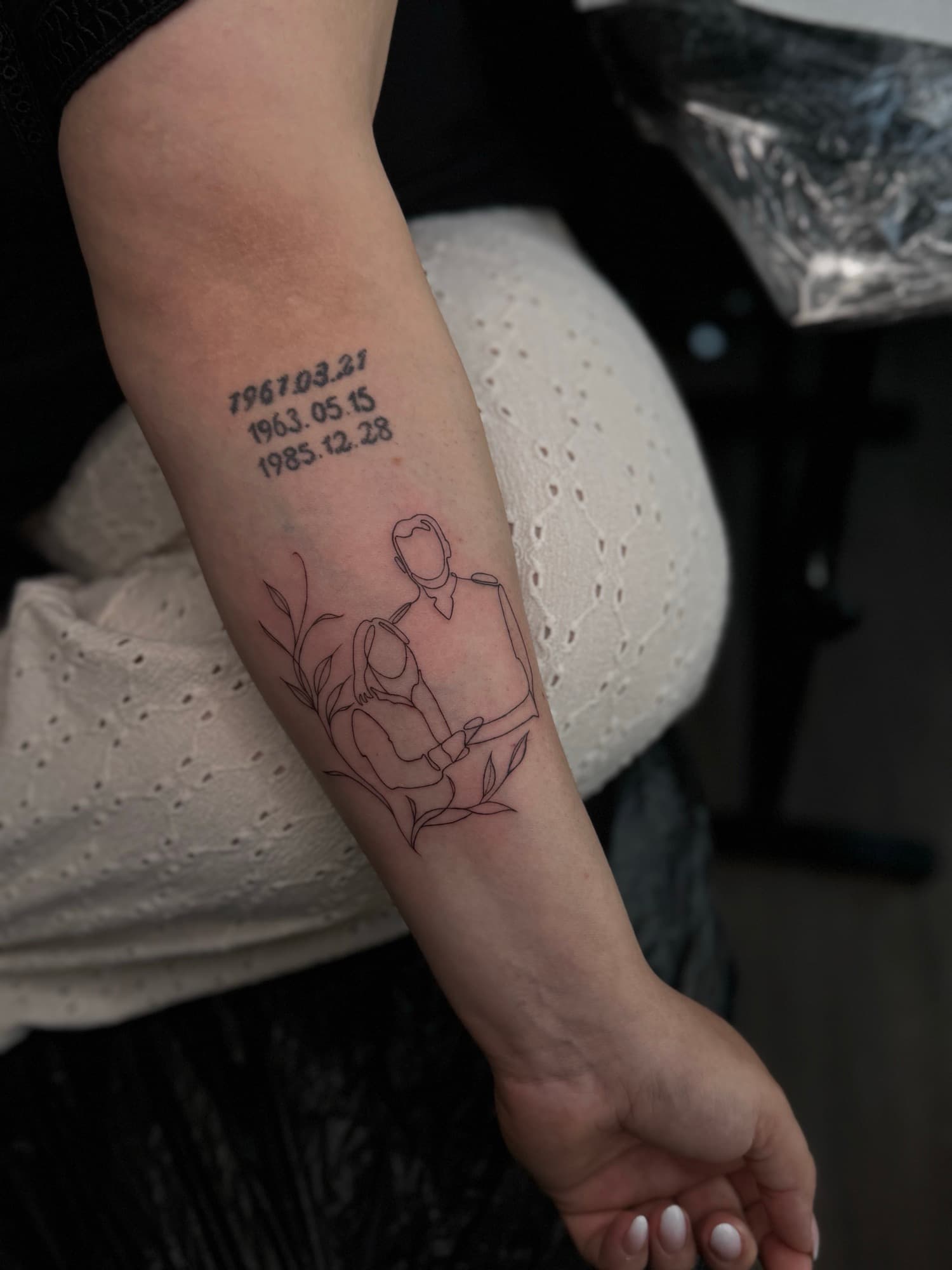
Normal in the first weeks
- Redness right around the lines for the first two or three days
- Warmth and slight swelling on day one, especially on wrist, ankle and ribs
- Clear to reddish fluid in the first 48 hours — that is plasma, not infection
- Itching from day three or four: the most common symptom there is, and a sign of healing
- Scabs and crusts that come off on their own
- Flaking like after sunburn, in week two
- A dull, milky veil over the colours for three to four weeks
- Under Second Skin: a cloudy pocket of plasma and ink — it looks worse than it is
Do not wait this one out
- Redness that grows instead of shrinking after day three
- Pain that increases rather than fading
- Yellow or greenish discharge, bad smell — have it looked at
- Red streaks running away from the tattoo across the skin — see a doctor now
- Fever, chills, swollen lymph nodes — see a doctor now
- The area still feels hot and hard after a week — have it looked at
- Blisters, welts or severe itching in one colour only — that can be a pigment allergy
- A rash around the edge of the film: usually a reaction to the adhesive. Take it off and heal open
An infection is not the same as normal healing: it tends to get worse quickly rather than better slowly. Rule of thumb — anything that increases after day three. With a fever, red streaks, pus or swollen lymph nodes you go straight to a doctor without asking first. In every other case send Kisha a photo: she sees healing in progress every day and can tell you whether it still looks like a normal course — that is not a medical diagnosis, but it often saves you the worry.
What to Use
* What goes on your tattoo is something Kisha tells you after the session — it depends on your skin, the piece and how it is covered. Not suitable: greasy, airtight ointments such as petroleum jelly, anything with fragrance or preservatives, and anything you have reacted badly to before.

Common Questions About Tattoo Aftercare
How do I care for a fresh tattoo?
Keep it clean, pat it dry, moisturise, leave it alone. Without film that starts on day one. Under Second Skin only after the film. The most common mistake is not too little cream but one thick layer that traps heat and moisture — better to top it up several times a day so the tattoo never dries out.
When can I start moisturising?
It depends on what you go home with. Without film you start on day one: wash, pat dry, moisturise — often enough that the skin never feels tight and never dries out. A tattoo that dries out forms a hard scab, and ink gets caught in it. Under Second Skin you do not moisturise at all while the film is on. Care begins when it comes off. What matters is not the thickness of one layer but that the skin stays supple throughout — better a little, often, than a lot at once.
How long can I not shower with a fresh tattoo?
You can shower straight away — short, lukewarm, and without holding the tattoo under the stream. What you cannot do for three weeks is bathe, swim or use a sauna. The difference is soaking time, not water: waterlogged skin gives up pigment.
Does Bepanthen pull the ink out of a tattoo?
No. What ends up on the tissue is plasma along with surface ink that was still sitting on top of the skin — not pigment from below. This happens with any ointment. Bepanthen is simply the most used, so it gets the blame. What matters is not how much you use but that the tattoo neither dries out nor suffocates under one thick layer.
Does it have to be a tattoo-specific product?
Not necessarily — what matters is what is in it, not the label. Stick to what Kisha gives you after the session: she knows your piece and what suits the covering you went home with. Stay away from greasy, airtight ointments like petroleum jelly, and from anything fragranced — they trap heat and moisture and irritate fresh skin.
How long does Second Skin have to stay on?
Second Skin is a breathable, self-adhesive wound film — the same category as Suprasorb, Dermalize or Saniderm. It stays on the tattoo for 4–5 days in one go. A classic dressing of film and paper, by contrast, comes off after 2–4 hours, and cling film never belongs on a tattoo overnight. Which film makes sense when is covered in the article “Tattoo Wrap: How Long Does It Stay On?”.
My tattoo itches like crazy — what can I do?
Itching from day three is the most normal symptom of the whole process, and usually it simply means the skin is too dry. Scratching is out of the question: the scab takes ink with it and can leave scars. What helps: top up the ointment, tap with a flat hand instead of scratching, brief cooling with a clean cloth. If it itches severely in one colour only, send Kisha a photo — that can be a pigment allergy, and it looks different from normal healing itch.
How do I know if my tattoo is infected?
By the direction it is going. Normal healing improves a little every day: redness and swelling fade from day three. An infection gets worse — more redness, more pain, heat, yellowish discharge. With a fever, red streaks, pus or swollen lymph nodes you see a doctor, no detour. If it looks different and you are simply unsure, send Kisha a photo and she will tell you whether it reads as a normal course.
Can I take the scab off if it bothers me?
No. The scab holds pigment that is not yet anchored in the skin. Pulling it off takes ink with it, and that is exactly how the pale patches that need touching up later appear. It falls off on its own, usually between day seven and fourteen.
A blister formed under the film — is that bad?
Usually not. Plasma and surplus ink collect under Second Skin. It looks cloudy and alarming but belongs to the process. It becomes a problem if fluid leaks out, the film lifts at the edges, or there is real pressure underneath — then take it off, wash, and heal open.
The film came off too early — what now?
Not a disaster. Wash the tattoo with lukewarm water and mild soap, pat dry, and care for it openly from there: moisturise regularly, keep it clean, do not let it dry out. Sticking on a fresh piece of film is only worth it in the first few hours, and only on genuinely clean skin.
My tattoo is weeping and staining my clothes — normal?
For the first day or two, yes. What comes out is plasma with surface ink. That is why you should put something underneath at night that is allowed to get dirty. It should stop after 48 hours — if it does not, or the fluid turns yellowish and smells, it is no longer plasma: send Kisha a photo.
Can I sleep on a fresh tattoo?
On the other side, if you possibly can. Hours of pressure and friction against the bedding are both bad for healing. For a back piece a clean cotton sheet helps, and for an arm or leg, a pillow that keeps the area free. Second Skin makes all of this considerably easier.
Can you be allergic to tattoo ink?
Rarely, but it happens, most often with red. The pattern is telling: everything heals normally except one colour, which itches for weeks, rises, or blisters. That is not a care mistake and more cream will not fix it. Send Kisha photos over a few days — she can see whether it really is limited to that one colour. If it is, a dermatologist is the right next step.
My tattoo on the elbow or knee heals worse — why?
Movement. Joints stretch the skin hundreds of times a day, the scab keeps tearing open, and the area needs longer. That is normal, not a mistake: moisturise especially consistently there, stretch less, and expect a touch-up to be needed more often than on the upper arm.
My tattoo is peeling and looks dull — is that normal?
Yes, and it is the moment most people start to worry. In week two a new, still-thin layer of skin sits over the ink, which is why everything looks milky. The depth is back after three to four weeks. Do not rub anything off — it speeds up nothing.
When can I train again?
Light movement after two or three days, real training after two to three weeks. The standard is 14 days — that is how long the surface needs, and sweat on an open wound is the problem, not the movement itself. Placement matters too: a tattoo on the upper arm forgives running, a tattoo on the ribs does not forgive bench press. The full version, sauna and swimming included, is in Sport after a tattoo.
When can I swim or use a sauna again?
After three weeks, and only once nothing is peeling any more. Chlorine, salt water and heat are all a problem while the skin is still open.
How long does healing take in total?
Two to three weeks on the surface, three to four months all the way through. Looking healed and being healed are not the same thing. That is also why touch-ups only happen after three to six months.
There is ink missing in one spot — what now?
Wait until everything has fully healed, then get in touch. Small gaps are normal and part of the craft. Touch-ups happen after three to six months: before that the dermal layer is not finished and you would be working on skin that is still changing. When a touch-up is genuinely needed and when it only looks that way is covered in Tattoo touch-ups.
When can I put sunscreen on a tattoo?
Only once it has fully healed, so after three to four weeks at the earliest. Sunscreen does not belong on an open or freshly closed wound — the filters irritate it, and the area should be out of the sun entirely during that time anyway. After that the opposite applies: SPF 50+ on any tattoo that sees daylight, permanently, not just on holiday. UV is the main reason tattoos turn grey and lines blur over the years, and with fineline you notice it far sooner than with bold work. While it is still healing, fabric is the only sun protection. More on holidays, the sea and fresh tattoos is in Tattoo in summer.
How do I care for my tattoo long term?
Two things, permanently: moisturise when the skin is dry, and use sun protection. UV fades tattoos and blurs lines — with fineline you notice it sooner than with bold work. SPF 50+ is the best investment in a tattoo that still looks good in ten years.
Questions about aftercare? Write to Kisha directly.