.jpg&w=1920&q=75)

A business consultant, mid-forties. He came in with a clear idea — a small motif on his wrist. And then, just before I started, he asked me: "Kisha, do you think this is too much?"
I asked: "For whom?"
"Well — for clients."
"Do your clients have a problem with your work?"
"No, not really."
"Then let's start."
That wasn't a rhetorical move. That was the only question that actually mattered.
A Tattoo in 2026 Is Not a Statement Anymore — It's Jewelry
When did we stop debating whether earrings were "too much for the office"? Sometime in the eighties, I imagine. Tattoos are going through exactly that transition right now.
I tattoo people from all kinds of professions: doctors, lawyers, accountants, chefs, engineers, teachers — and yes, grandmothers too. What I see: a tattoo is no longer a signal for anything specific. It has become personal jewelry. Same as earrings, necklaces, or a distinctive ring. And just like with jewelry, almost no one today asks: "Am I allowed to wear this to work?"
The prejudice still exists — but it's concentrated in specific generations, specific industries, specific worldviews. And that circle gets smaller every year.
What a Quality Tattoo Really Costs Today — and What That Means
A good tattoo in Munich costs about as much as a nice dinner for four people. Not a fast-food meal. There's a reason for that.
I work with American pigments that are medically tested and hold their quality on skin for decades without fading or migrating. The protective films we apply right after tattooing are the same ones used in medical settings — sterile, breathable, skin-friendly. The machines, the cartridges, the entire hygiene protocol — none of that is a compromise. It's premium.
People who invest in a good tattoo usually make considered decisions. That sounds obvious, but I see it every day. Someone who pays properly for a tattoo rarely regrets it.
Professions — an Honest Assessment
I'll say this directly.
Tech, creative industries, marketing, hospitality, trades, architecture, freelancers: nobody cares. A tattoo on your forearm is about as relevant as your preferred coffee order.
Public institutions, schools, hospitals: this depends heavily on the specific employer, not the profession itself. I know teachers with visible tattoos who have been teaching for years without it ever being an issue. I also know cases where a calm conversation with a manager would have made sense. This is less about the job than about the company culture.
Diplomat with a face tattoo? That's probably difficult — at least in most countries, at least in 2026. Pediatrician with a botanical motif on the forearm? Completely realistic. I have tattooed doctors who wrote to me afterward: not a single patient mentioned anything. The kids, on the other hand, thought it was very cool.
Neck, Hands, Visible Spots
Most concerns revolve around these areas. The honest answer: the spot itself isn't the problem — the quality of the work is.
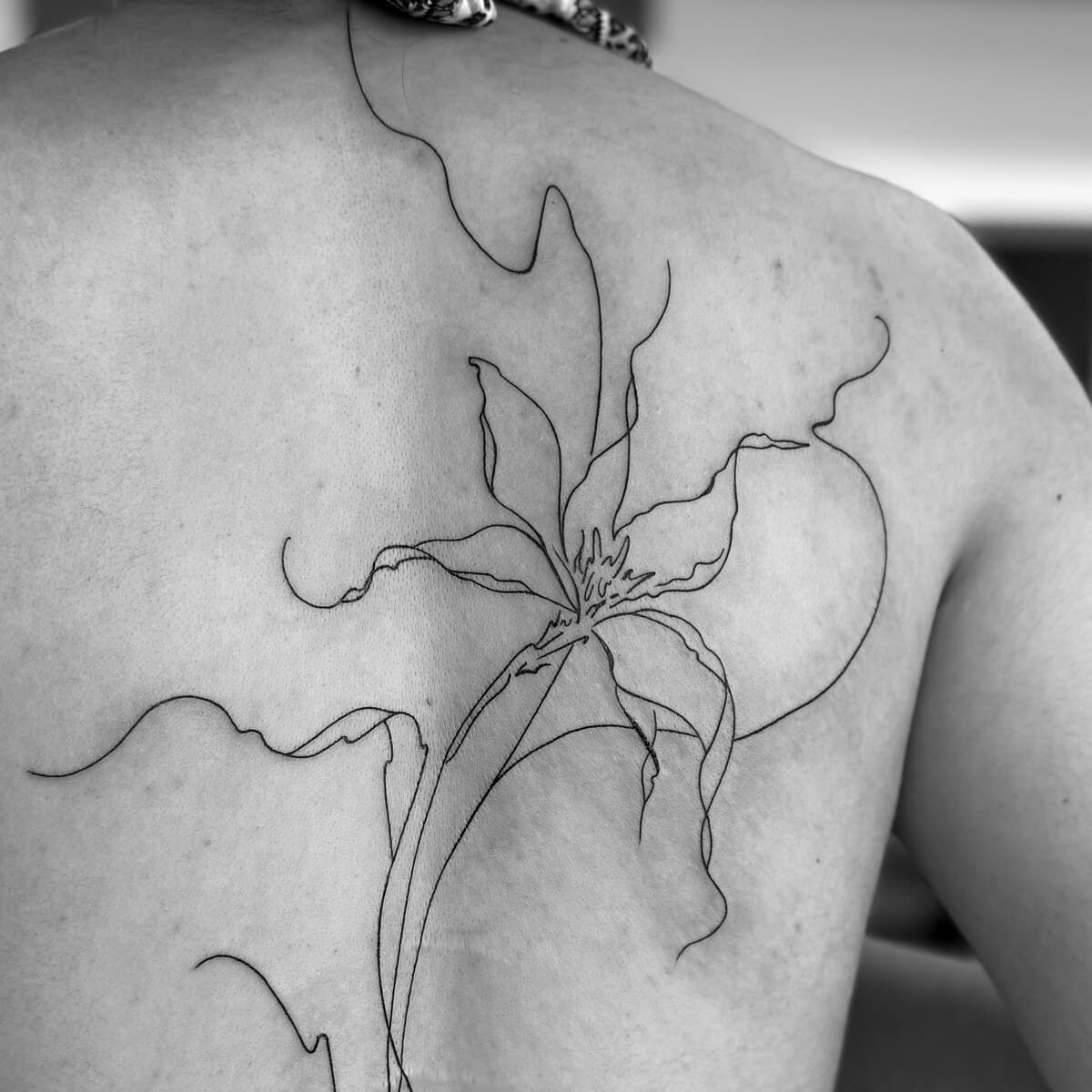
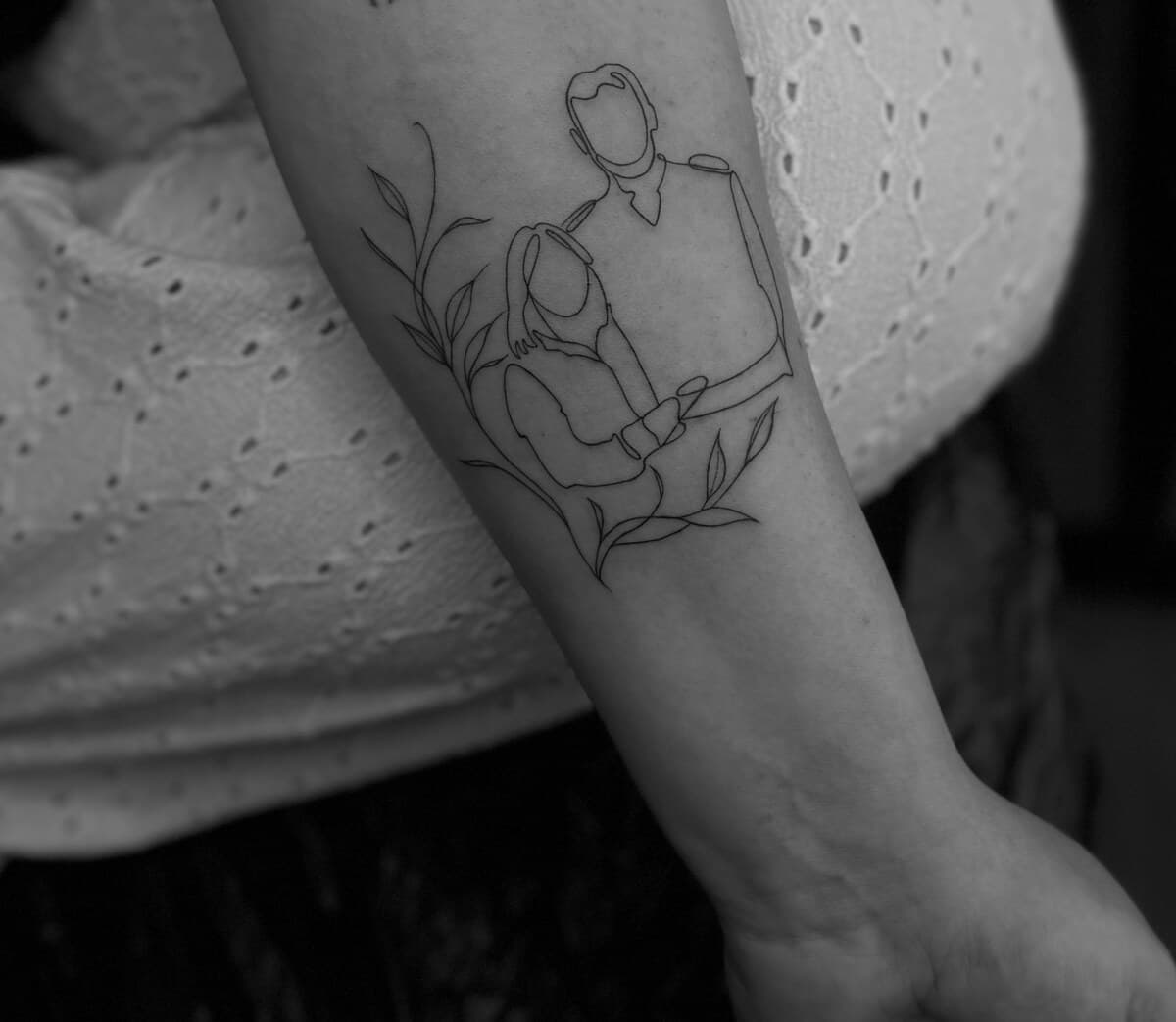
A poorly done tattoo on the wrist is a problem — not because of the placement, but because of the quality. A precise, well-executed fine-line motif on the hand is something most people simply find beautiful.
The reaction to a visible tattoo depends largely on how well the work was done. If you want a visible spot, let's do it properly — no compromises, no design that just "works," but one that truly fits.
What Clients Tell Me Afterward
A lawyer had a delicate botanical branch tattooed on her forearm. She came back a few months later — not for another tattoo, but to tell me that three colleagues had asked about the studio. Her clients never said a word.
An accountant got a small motif on the neck. His first concern was his manager. His manager's first comment was: "Where did you get that done?"
These aren't exceptions. This is everyday life — it's just rarely interesting enough for anyone to write about.
When I Would Actually Wait
There is one situation where I say: maybe not yet.
If you're on probation. If you're new to a conservative environment and don't yet know what the workplace culture is really like. Not because a tattoo would be wrong — but because you're still an unknown in that phase. First impressions carry differently than they do later.
Wait three months. Get to know the environment. Then get whatever you want.
And if you're unsure — not whether you're allowed, but whether this placement, this design, this moment is right for you — just write to me. I'll tell you honestly what I think.