.jpg&w=1920&q=75)

"Patchwork tattoo" is one of the most common words that comes up in consultations right now. The idea sounds tempting: no big plan, no deciding years in advance, just start and let it grow over time.
I'll say it straight: patchwork works — but not automatically. I've seen arms where every single piece was great on its own, and the sum still looked random. And I've seen patchwork sleeves that look like they were planned from day one, even though they never were.
The difference isn't luck. It comes down to a handful of decisions you — and I — make at the start, even when it doesn't feel like a decision at all.
What a patchwork tattoo actually is
Patchwork means several standalone pieces on one area, without one continuous image like a classic sleeve. No flow from one scene into the next — more like a collection. Each piece stands on its own; you can start with one and add the next years later.
That's what separates it from a planned sleeve, where the beginning, middle and end are already decided on day one.
Why so many people are asking for it right now
I get the appeal completely. You don't have to commit to a single story. You start with one small piece that matters to you right now — and in a year your life might look different, but the next piece still fits.
For me as an artist, that also means more freedom on every individual piece, without it automatically hurting the overall composition.
Where it goes wrong — my honest experience
I'm not trying to scare you off, but I'll say it plainly: the arms that end up looking messy almost always have the same problem — the pieces were placed however felt right in the moment, without any thought for size, spacing or which way they face.
A tiny piece right next to a huge one. One looking up, right beside one pointing down. Too much empty space in one spot, none in another. In the end, the skin looks like a pinboard covered in stickers — not like something that belongs together.
What actually works together on my arms
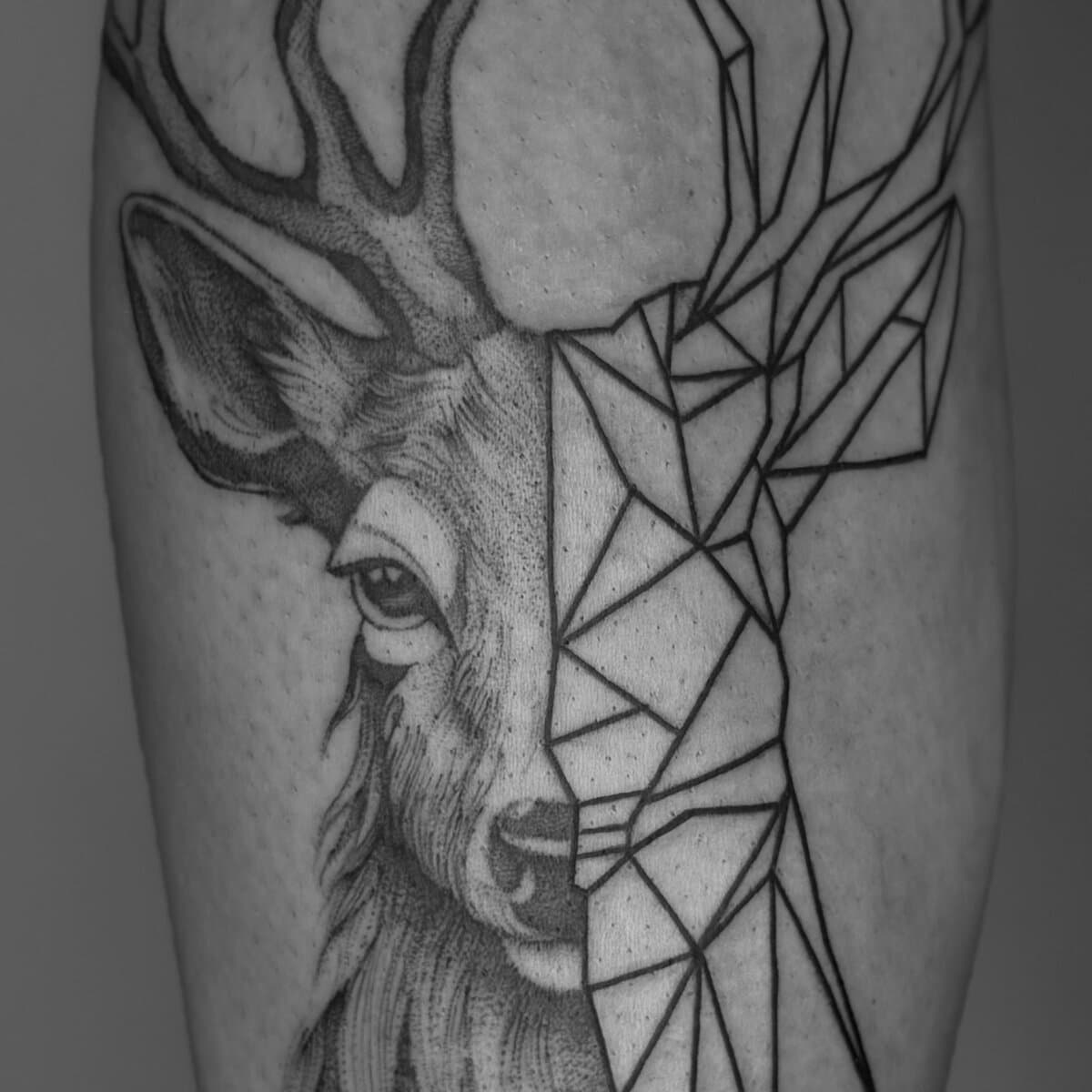
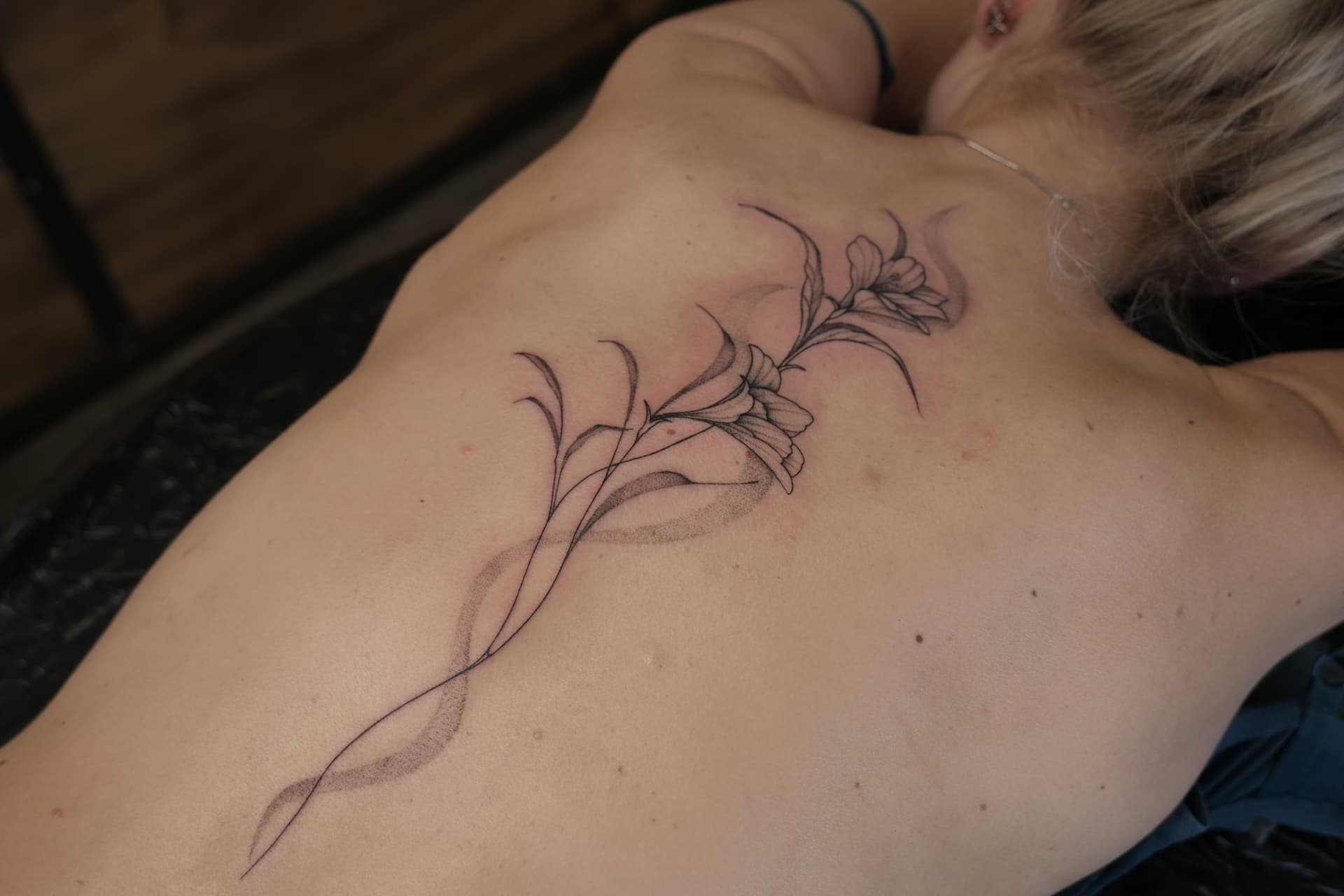
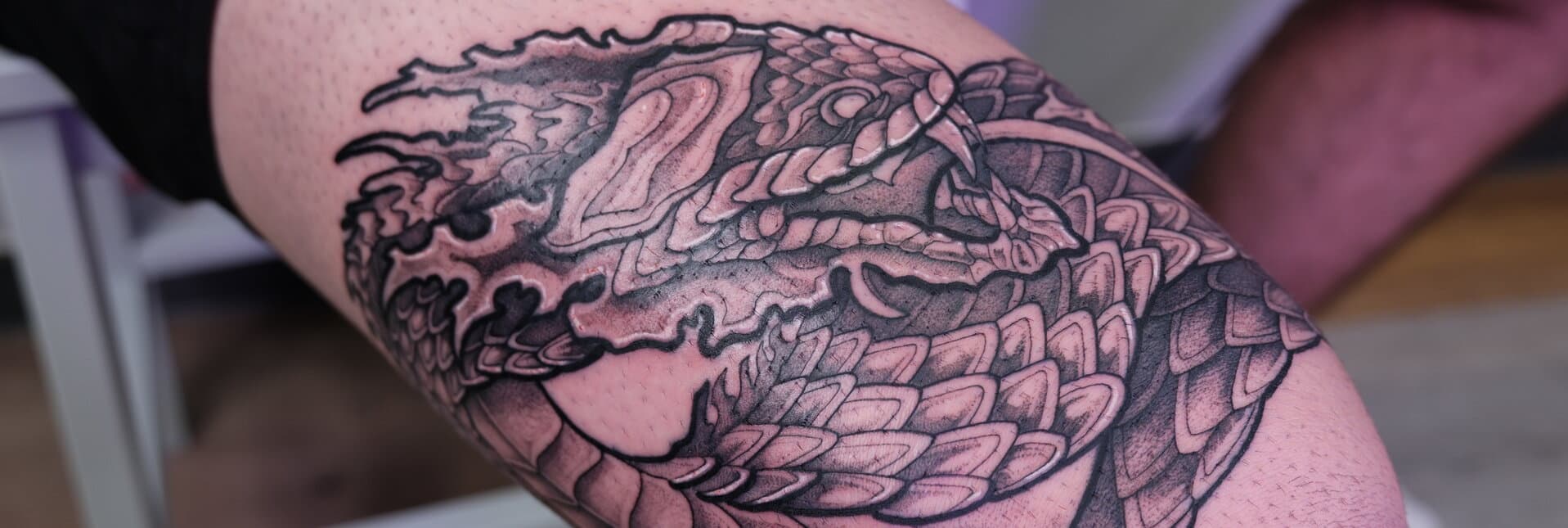
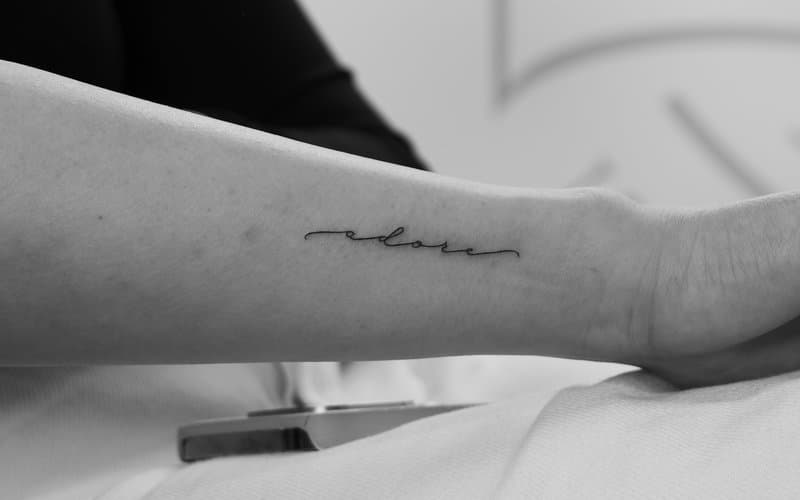
I work exclusively in black and grey — fineline, blackwork, graphic, Japanese-inspired motifs. That's already half the battle: if everything stays in the same tonal range, the rest doesn't need to be perfectly planned to read as one whole.
Even so, I check a few things on every new piece:
- Scale relative to what's already there
- Direction and flow — pieces "facing off" against each other read as chaotic
- Spacing — enough skin to breathe between pieces
- Line weight — fine fineline detail next to overly heavy blackwork can fight each other
A little planning still pays off
Even though patchwork doesn't need to be fully mapped out, a short conversation beforehand saves you trouble later. I always ask: where should the first piece sit, if you already know more will come? Do you start in the middle or at the edge?
That costs you five minutes of consultation and saves you from a piece later being "in the way" because there's no room left for the next one.
When does it become patchwork — instead of just several separate tattoos?
Honestly, there's no fixed line. For me, it starts feeling like patchwork the moment you deliberately leave room for "the next piece" — even before you know what that will be. From that point on, I'm already thinking ahead while I work, not just about the one piece in front of me.
If you're weighing whether your next tattoo works as patchwork with what you already have — just message me and we'll look at it together.